Blogs
Can Curb Rash Turn Into a Bigger Wheel Problem?
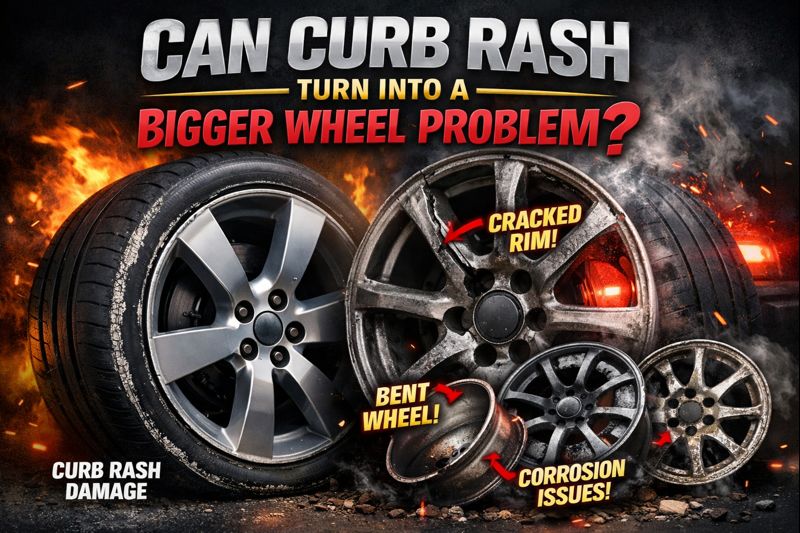
Can Curb Rash Turn Into a Bigger Wheel Problem?

Most drivers think curb rash is just a cosmetic issue—something that looks bad but doesn’t really matter. Scratches, scuffs, or gouges on the edge of the wheel often get ignored or put off for later.
But here’s the truth from an expert point of view: curb rash can absolutely turn into a bigger wheel problem if it’s not properly inspected.
Let’s explain why.
What Is Curb Rash, Really?

Curb rash happens when your wheel scrapes or hits a curb, usually while parking or making a tight turn. The damage often shows up as:
Scratches along the wheel lip
Chipped paint or clear coat
Gouges in the metal
What you see on the outside is only part of the story.
Why Curb Rash Is More Than Just a Cosmetic Issue

When a wheel hits a curb hard enough to scrape metal, the impact force doesn’t stop at the surface. That force travels through the wheel and can cause hidden damage, including:
Small bends in the wheel lip
Inner barrel damage (not visible from the outside)
Hairline cracks starting in stress points
Many drivers fix the appearance but never check the structure—and that’s where problems begin.
How Curb Rash Can Turn Into a Bigger Problem
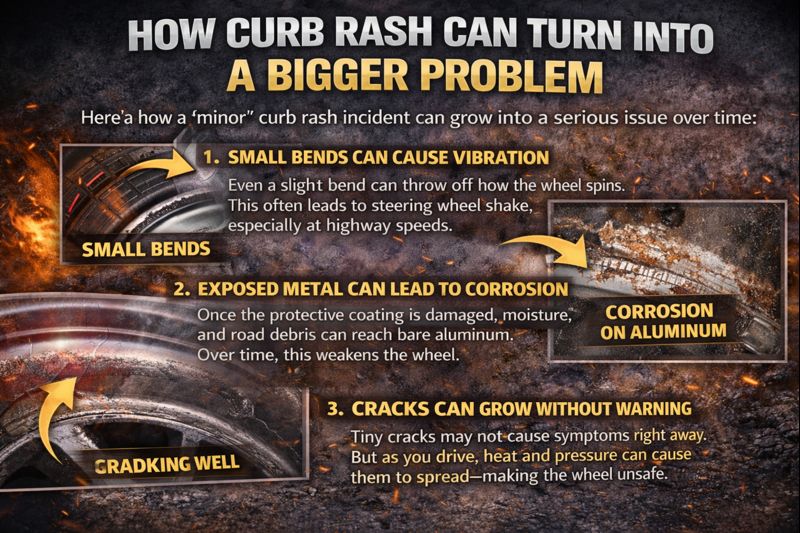
Here’s how a “minor” curb rash incident can grow into a serious issue over time:
1. Small Bends Can Cause Vibration
Even a slight bend can throw off how the wheel spins. This often leads to steering wheel shake, especially at highway speeds.
2. Exposed Metal Can Lead to Corrosion
Once the protective coating is damaged, moisture and road debris can reach bare aluminum. Over time, this weakens the wheel.
3. Cracks Can Grow Without Warning
Tiny cracks may not cause symptoms right away. But as you drive, heat and pressure can cause them to spread—making the wheel unsafe.
Why Tire Balancing Won’t Fix This
If curb rash caused a bend, tire balancing alone won’t solve the problem. Balancing only corrects weight issues—it does not fix a wheel that’s out of shape.
That’s why some drivers balance their tires again and again, only to feel the vibration come back.
How Professionals Check for Hidden Damage
At Pearland Wheel Repair, curb rash wheels aren’t just looked at—they’re properly tested.
A full inspection includes:
Removing the wheel from the vehicle
Spin testing to check for wobble
Measuring runout (how straight the wheel spins)
Inspecting inner barrel and stress points
This is the only way to know whether the damage is cosmetic or structural.
Can a Curb-Rashed Wheel Be Repaired Safely?
In many cases, yes.
If the wheel is only cosmetically damaged, refinishing can restore its appearance. If there’s a bend, professional straightening equipment can often bring the wheel back to factory specifications.
If cracks are found, a professional will determine whether safe repair is possible—or if replacement is the safer option.
Signs Your Curb Rash Might Be a Bigger Issue
You should get your wheel checked if you notice:
Steering wheel vibration
Car pulling to one side
Uneven tire wear
Air pressure loss
A wobbling or shaky feeling
These symptoms often show up weeks or months after the curb impact.
The Bottom Line
Yes—curb rash can turn into a bigger wheel problem if the wheel isn’t properly inspected. What looks like a simple scratch could be hiding a bend or crack that affects safety, ride quality, and tire life.
The sooner it’s checked, the easier and more affordable the repair usually is.
📞 Call to Action

If your wheel has curb rash—or you’ve hit a curb and want peace of mind—don’t guess.
👉 Get a professional wheel inspection today.
At Pearland Wheel Repair, we check both the appearance and the structure of your wheel to make sure it’s truly safe to drive.
Call Cory at 📞 713-470-0131 to schedule your inspection and keep small damage from turning into a big problem.

How It Works
From diagnosis to finished finish
Follow a simple, safe workflow: inspect damage, choose repair method, prepare surface, perform repair or coat, and final inspection. Each step links to detailed guides, tool lists and time estimates so you can plan the job with confidence.
- Inspect & document damage
- Select repair or refinish method
- Prep, repair, and coat
- Final QA and balancing

5,200+
Wheels fixed
12k+
Coatings applied
4.9/5
Average rating
15
Years experience
Customer Stories
Real repairs, real results
Short testimonials from readers and local customers who used our guides or services. Each quote highlights practical outcomes — saved time, lower costs and restored wheels that look factory‑new.

“Saved me hundreds fixing curb rash myself after following a step-by-step guide. Clear instructions and the right tool list made the difference.”
— Marcus L., Portland

“Their powder coating comparison helped me choose a local coater that doubled the durability of my trail wheels. Excellent before/after photos set expectations right.”
— Aisha T., Denver
Latest Guides
Short reads that solve common problems
Fixing Curb Rash in an Afternoon
A practical, tool-by-tool walkthrough that shows how to sand, fill and paint small curb dings so wheels look near-new without expensive shop visits.
Choosing Powder vs Wet Paint
Side-by-side comparison, cost expectations and longevity guidance to help you pick the best finish for your driving style and budget.
Prep Checklist for a Perfect Paint
A pre-paint inspection and prep checklist covering blast media, masking technique, and clean-room tips to avoid common finish failures.

Get the Repair Checklist
One-page checklist for any wheel job
Download a printable checklist covering inspection points, necessary tools, prep steps, safety reminders and a post-repair QA list. Ideal for first timers and seasoned DIYers who want consistent, reliable results.
Frequently Asked Questions
Quick answers to common concerns
Can I safely repair a bent wheel at home?
Minor bends and curb rash can be repaired at home with the right tools and safety precautions. Large structural damage and cracks require professional inspection and repair or replacement for safety.
How long does powder coating last?
With proper prep and application, a durable powder coat can last many years under typical road conditions. Lifespan depends on environment, usage, and whether protective clear coats are applied.
Is custom painting more expensive than powder coating?
Initial cost varies — custom wet paint with multi-stage clear coats can be pricier for complex designs. Powder coating is durable and cost-effective but less flexible for multi-color gradients.
Do I need to remove the tire before refinishing?
Yes — rims should be removed and tires dismounted before media blasting, painting or powder coating to ensure even coverage and avoid damage to tires and valves.
WheelWorks
[email protected]
(555) 555-0123
PO Box 1234, Anytown, USA
© 2025 WheelWorks. All rights reserved.